
One repository,
ready to go.
One less thing to worry about.
DSpace One is a fully configured, production-ready institutional repository, delivered as managed SaaS. Hosting, upgrades, security, support and content migration are all included. Every technical decision has already been made.
 ORCID
 OpenAIRE
DataCite
 OpenAlex
CORE open access aggregator
 Google Scholar
OAI-PMH
COAR

The product that solves three core problems
Setting up an institutional repository used to mean months of configuration, a dedicated IT team and a long list of decisions nobody really wanted to make.
Months of configuration
Schema design, workflows, submission forms and branding, all decided from scratch before a single record is deposited.
An in-house IT team
Servers, upgrades, backups and security patching become the permanent responsibility of the university's own IT staff.
Decisions nobody wants
What metadata schema? What hosting? What happens when the next DSpace release lands? Every answer delays go-live.
DSpace One removes all three
Built for institutions that need a repository, not a repository project.
So you don’t have to make the decisions. We already did.
A fully configured, production-ready DSpace repository. Not a stripped-down version. Not a demo. A complete SaaS solution with cloud hosting, updates and upgrades, maintenance, support and content migration, all included.
Every technical decision has already been made by people who have implemented DSpace across dozens of institutions in Europe.
What DSpace One delivers
A complete DSpace SaaS package, organised into four areas of scope. Select an area to see it in the product.
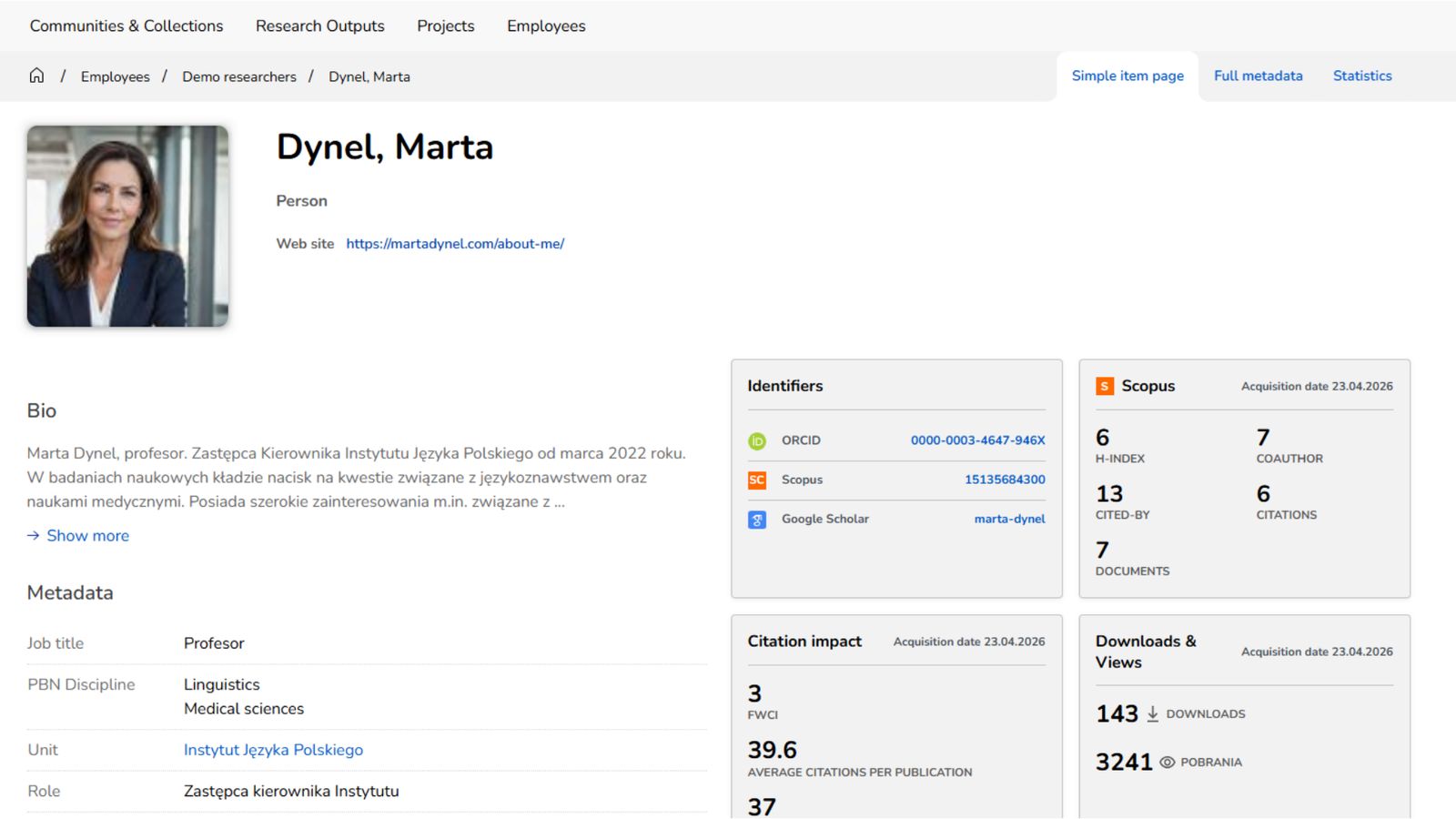
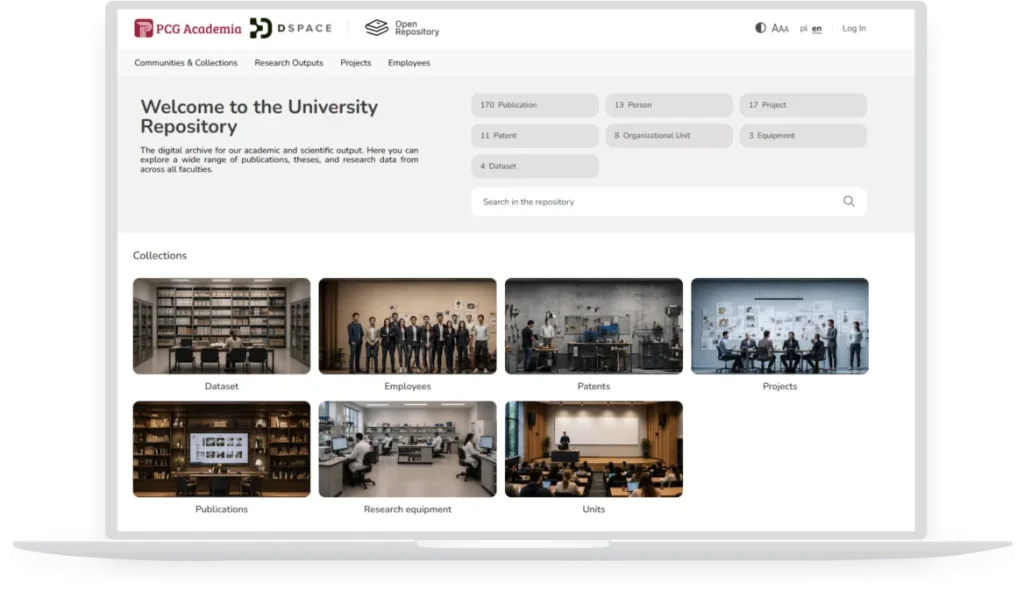
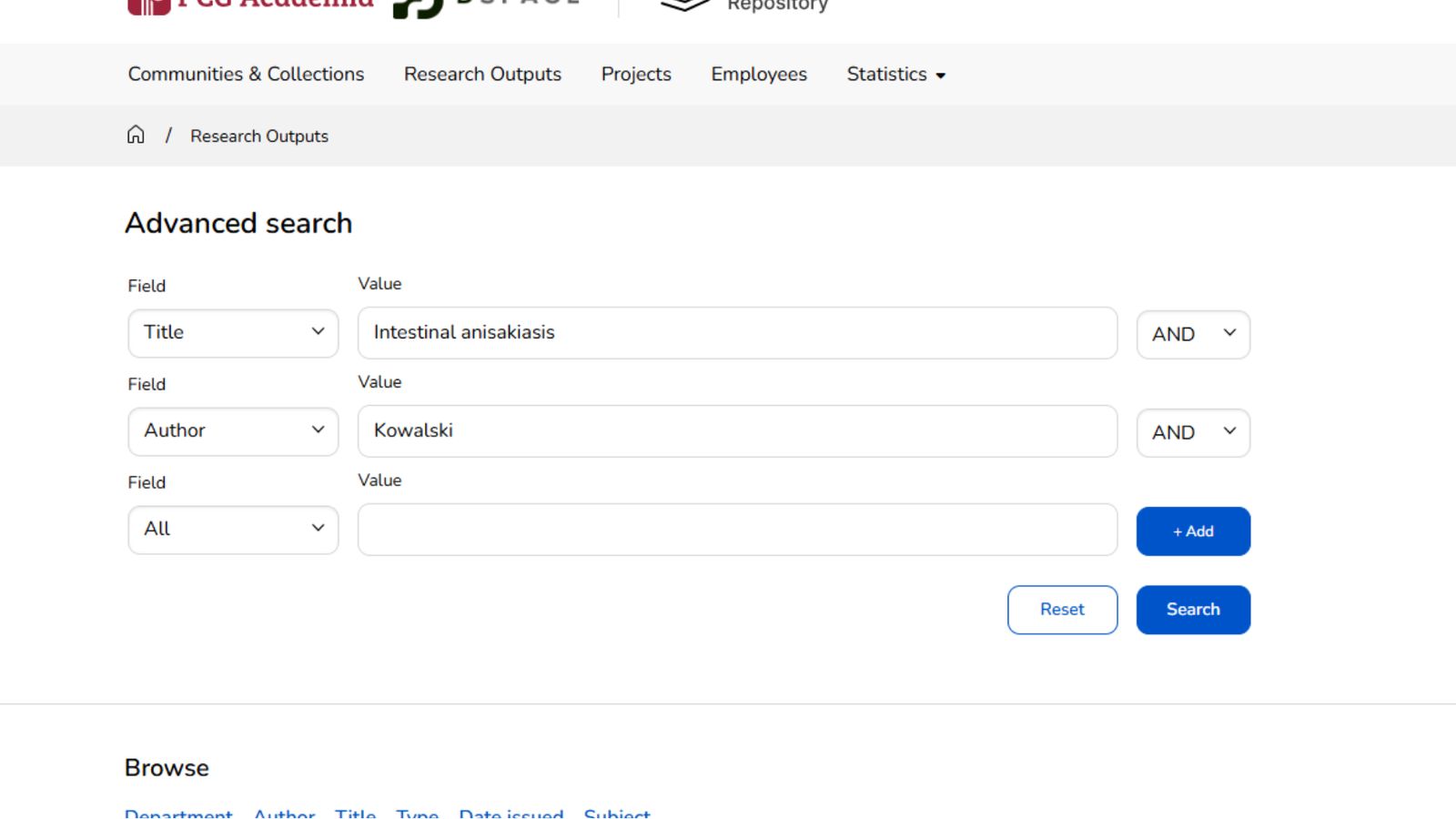
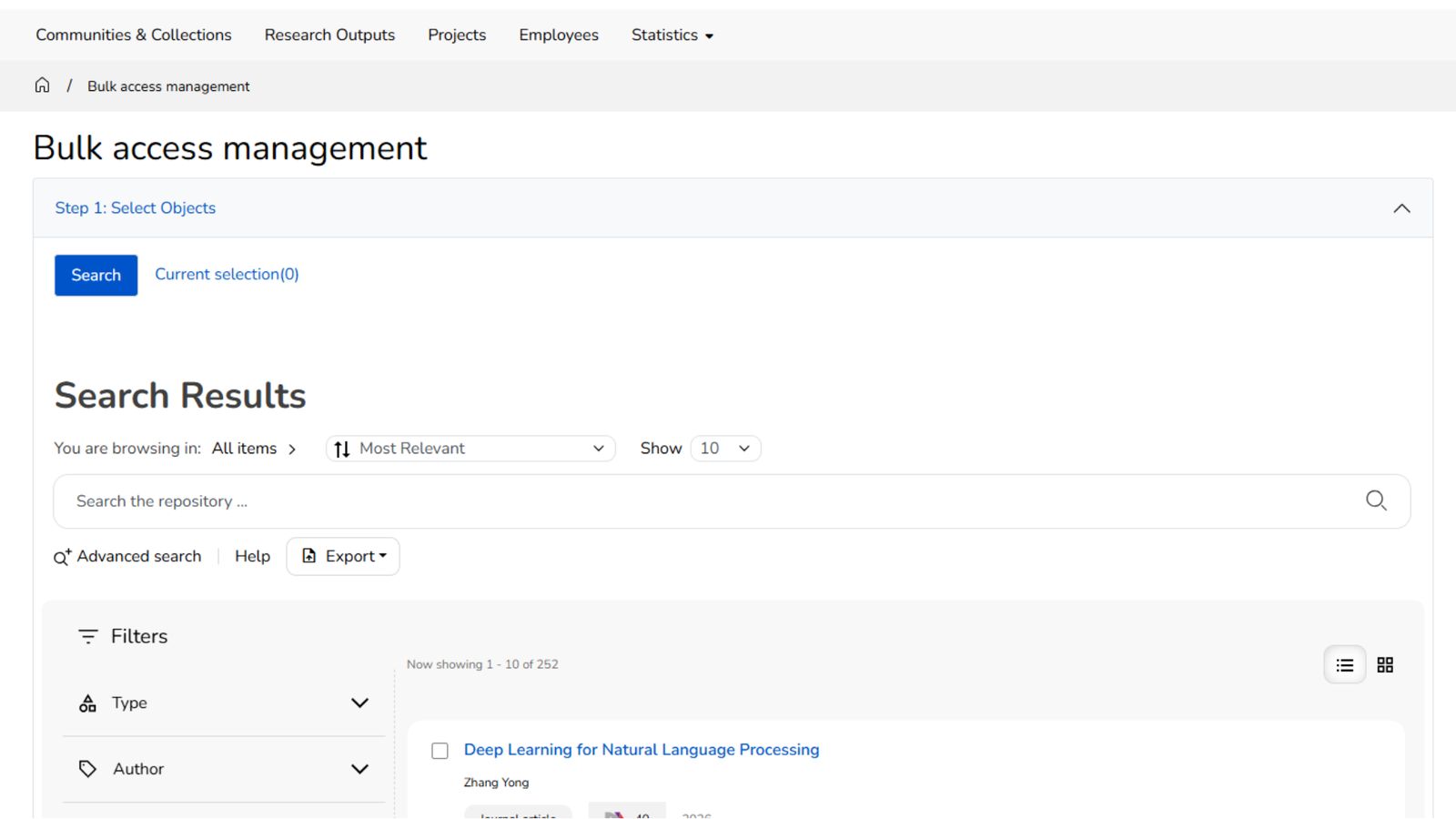
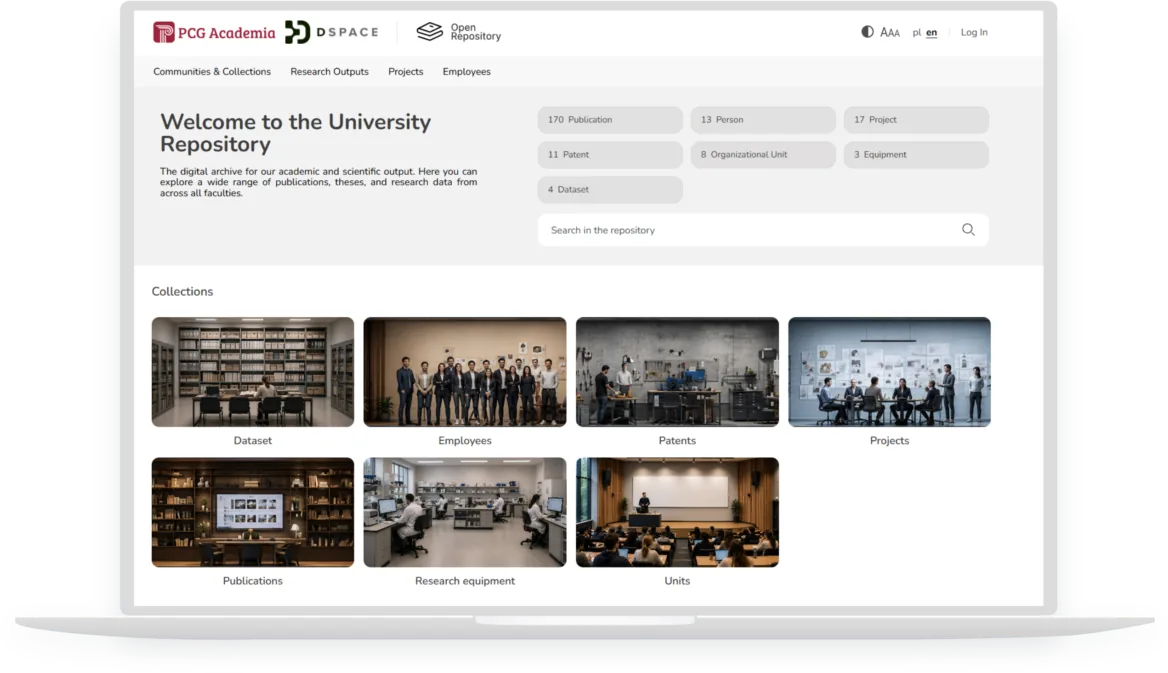
Explore the platform
Everything DSpace One includes, in one place. Pick an area to see it in detail.
Everything a modern repository should do, working on day one
The functions included in every DSpace One instance. See them all in action in the live demo below.
Advanced faceted search
Full-text and fielded queries, refined by facets — type, year, author, access, collection — with flexible sorting.
Metadata export
Export a single record or a whole result set in any of the standard bibliographic formats.
In-browser file preview
PDF and TXT open in the interface. No download required.
WCAG compliance
Accessibility built in from the start, not retrofitted later.
Custom branding
Styled to the institution's visual identity, fully responsive.
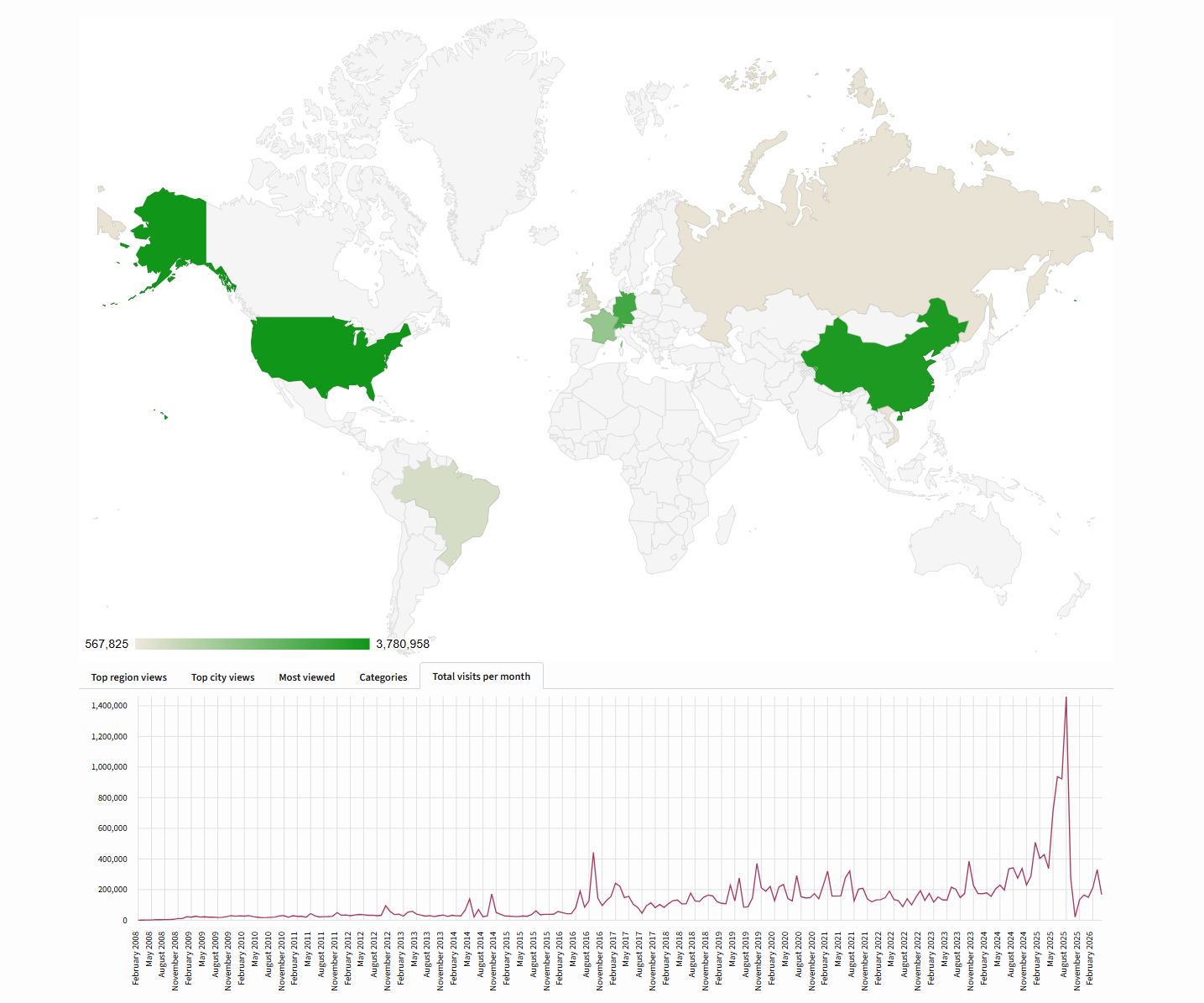
Usage statistics on a world map
See where interest in the institution's resources comes from, with downloads and views over time.
Collaboration graph
A clickable graph of co-authorship between researchers. Drag the nodes.
SDG classification
Tag outputs against the UN Sustainable Development Goals.
LaTeX rendering
Formulas in publication and achievement titles render as they were written.
Bounds on $\sigma^2$ estimators for $\alpha$-stable noise, $\alpha \in (1,2)$Administration and control, without a ticket to IT
Roles, permissions, groups, visibility and file access rights are managed in the interface by the people who own the content.
| Capability | Reader | Author | Editor | Administrator |
|---|
File access rights
Embargoes, time limits, admin-only and IP-restricted access. Pick a policy to see how it is written to the item.
Collection visibility
Set access separately for logged-in and anonymous visitors, per collection, with read and edit assigned to user groups.
Connected to the open science ecosystem
Baseline CRIS functionality and reporting are included. Every connection below ships pre-configured, giving the institution's outputs global visibility across aggregators, search engines and national systems.
Author identification
Links authors to their unique ORCID iD, in the form 0000-0002-1825-0097.
orcid.org · API v3Institution identification
Affiliations resolved to ROR IDs and linked to institution records at the point of entry.
ror.org · REST APIOpen science compliance
Metadata export to OpenAIRE Explore and import of funding information.
OpenAIRE Guidelines v4DOI registration
DOI registration and metadata deposit for datasets and publications.
DataCite Metadata SchemaMetadata exchange
Standard protocols for exchange with aggregators and national systems.
?verb=ListRecords&metadataPrefix=oai_dcFull-text retrieval
Full text retrieved by DOI from the world's largest open access aggregator.
core.ac.uk · Discovery APIBibliographic metadata
Bibliographic metadata retrieved by DOI and merged into the record.
api.crossref.org · api.openalex.orgDiscoverability
Indexing of resources through Highwire Press meta tags on every item page.
citation_title · citation_pdf_urlDelivered as managed SaaS
What is included beyond the platform itself, all within the annual fee. One supplier, one contract, one predictable annual cost. No infrastructure to procure and no upgrade projects to budget for.
When the baseline isn't enough
The platform grows with you, without becoming a project. Each module is optional, and none requires a custom implementation. The foundation underneath stays exactly the same.
Understands what a researcher is looking for, not just the words they typed. Semantic retrieval sits alongside the faceted search, not instead of it.
Reads the deposited file and proposes descriptors, so submission forms stop being abandoned halfway through.
Accessibility work built in from the start rather than retrofitted under deadline pressure, extending the baseline WCAG compliance to deposited content itself.
Shaped to your institution's brand, not a generic template with a logo in the corner.
Pull records from external repositories and aggregators straight into your instance, mapped to the baseline schema and refreshed automatically on a schedule.
Projects, funding and research reporting layered on top of the baseline entities. The step from repository to a full Current Research Information System.
Bot detection and traffic control
Automated crawlers now account for a large share of repository traffic. DSpace One identifies them continuously and acts before they distort your numbers.
Statistics you can trust
Crawler traffic is separated from real readers, so download and view counts reflect genuine interest in your collections.
Service stays responsive
Aggressive harvesters are blocked before they reach the application, keeping the service fast for actual researchers.
No manual policing
Traffic is analysed continuously and suspicious sources are handled automatically, or flagged for your review if you prefer.
A two-minute walk through a configured instance
Implementation in weeks, not quarters
Because every decision is pre-made, delivery is measured in weeks. Six weeks is the standard baseline for a clean migration.
Built on the world's most widely adopted repository platform
Delivered by one of its most experienced service providers. The configuration shipped with DSpace One reflects real-world decisions from production environments.
Tested across institutional deployments in Poland, Switzerland, Latvia, Belgium and beyond. The highest certification level in the DSpace ecosystem, held by PCG Academia.
Ready for
- Open science compliance requirements (OpenAIRE, OAI-PMH)
- National reporting frameworks
- Institutional assessment and evaluation cycles, without custom development
About PCG Academia

PCG Academia
A Poland-based subsidiary of Public Consulting Group Holdings, Inc. and an affiliated company of Public Consulting Group LLC. A leading international provider of IT solutions and consulting services for public institutions, specialising in digital repositories.
Over five years implementing and customising digital repositories for public institutions, from comprehensive solutions for managing public information through to implementation and long-term maintenance. International expertise combined with deep local knowledge, supporting clients all around the world.
Public Consulting Group
A US-based consulting and technology firm specialising in public sector solutions. Founded in 1986 by William S. Mosakowski and headquartered in Boston, Massachusetts.
PCG partners with government agencies to enhance the delivery of services in health, education and human services, helping public sector organisations improve performance and processes, and the communities they serve.
Let's discuss your repository
A live demo of a configured DSpace One instance, a scope conversation about your content, users and integrations, and a realistic timeline from agreement to a populated repository.